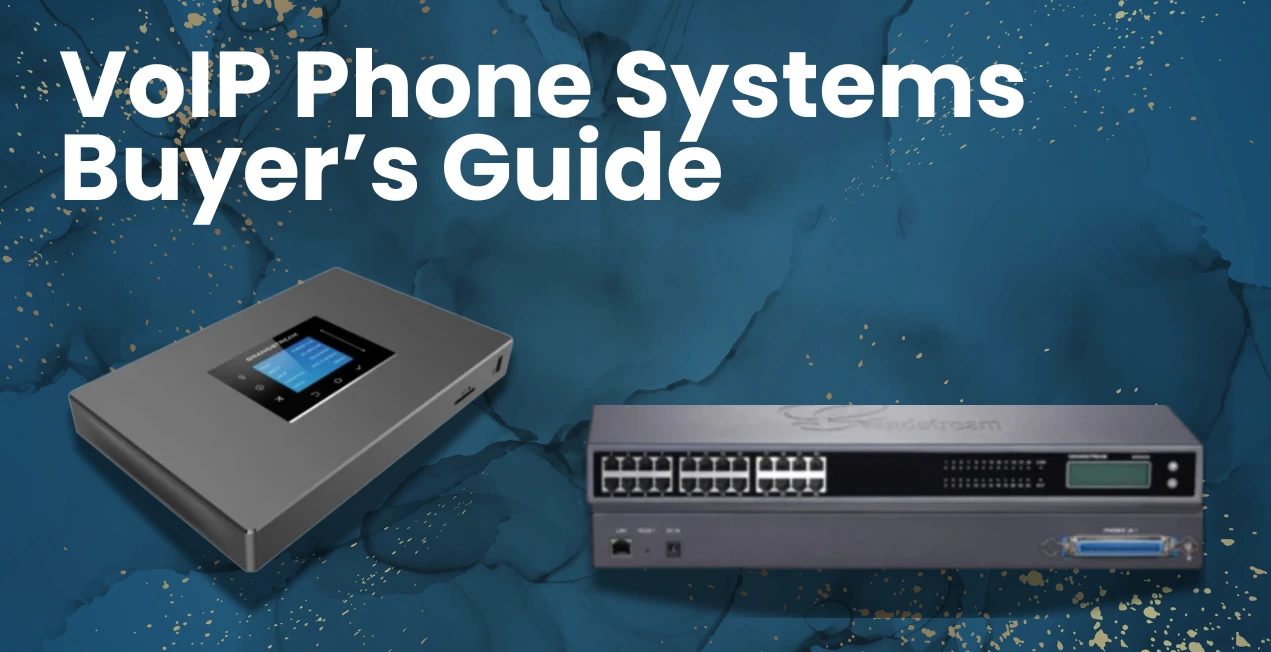
This VoIP phone systems buyer’s guide is mapped out to eliminate every ounce of confusion around modern business phone systems. Whether you are a small business owner, an IT manager, or an enterprise decision maker, this particular guide will explain VoIP phone systems in clear, non-technical language, while still going deep enough to answer advanced buyer questions.
Modern businesses no longer solely depend on traditional phone lines. A business VoIP phone system can power voice calls, video meetings, messaging, intercoms, paging, and full unified communications, all from one centralized platform. This guide guarantees that you understand every option before investing, leaving no unanswered questions.
What Is a VoIP Phone System?
A VoIP phone system (Voice over Internet Protocol) is a business phone system that uses the internet instead of traditional telephone lines to make and receive calls. Unlike legacy telephony, VoIP is a software-driven, flexible, and adaptable system.
Build a Smarter Business Phone System with Spogmey
From cloud and on-premise VoIP to SIP trunking and Microsoft Teams calling, Spogmey helps you design and deploy the right communication solution—secure, adaptable, and tailored to your business needs.
👉 Check one of the most trusted online VoIP Phones seller in USA, to get your system Today.
VoIP Phone System – Quick Definition
A VoIP phone system is a business communication system that transmits voice calls over the internet, offering advanced features, lower costs, and unified communications compared to a traditional phone system.
VoIP phone systems support:
- HD voice calling.
- Call routing and forwarding.
- Voicemail and voicemail-to-email.
- Video conferencing.
- Mobile and remote work integration.
- Messaging and collaboration tools.
Think of the difference between a landline phone and a smartphone; that is the leap VoIP makes for business phone systems.
Key Features of VoIP Phone Systems
Feature | Description | Business Benefits |
Caller ID | Displays incoming call info | Identify clients quickly |
Auto-Attendants / IVR | Interactive menus for callers | Streamline call routing |
Call Queues & Ring Groups | Organize incoming calls | Reduce missed calls |
Conference Calls | Multi-party calls with HD audio | Collaboration without travel |
Voicemail to Email | Receives voicemail as audio/text | Easier tracking and documentation |
AI Features | Smart call routing, chatbots | Reduce operational load |
Mobile Integration | Use business extensions on smartphones | Remote work-ready |
What Can VoIP Systems Do Beyond Calls?
Modern VoIP phone systems function as communication hubs.
Beyond calls, they support:
- Video Conferencing.
- Digital Whiteboarding.
- Workplace chats and messaging.
- Intercom and paging systems.
- Mobile and desktop apps.
When these tools are combined into one platform, the solution is known as unified communications, a core advantage of VoIP for businesses.
Types of VoIP Phone Systems
There are three main types of VoIP phone systems:
- On-premise VoIP phone systems.
- Cloud VoIP phone systems.
- Hybrid VoIP phone systems.
Each option suits different business needs, budgets and IT capabilities.
On‑Premise VoIP Phone System Explained
An on-premise VoIP phone system is owned, hosted, and managed by your business. The system runs on local hardware or servers that you control.
Types of On‑Premise VoIP Systems
- Physical IP PBX: Dedicated hardware appliance.
- Software IP PBX: Installed on your own servers (example: virtual servers)
Advantages of On‑Premise VoIP Phone Systems
- Full control over configuration and data.
- No per-user monthly subscription fees.
- Efficient call-line utilization.
Disadvantages of On‑Premise VoIP Phone Systems
- Higher upfront investment.
- Requires IT expertise.
- Slower access to new AI and UC features.
Cloud VoIP Phone System Explained
A cloud VoIP phone system is a subscription-based service where the provider hosts and manages the infrastructure. Businesses access the system through the internet.
Advantages of Cloud VoIP phone systems:
- Minimal setup and maintenance.
- Easy adaptability.
- Built-in unified communications.
- Predictable monthly pricing.
Disadvantages of Cloud VoIP Phone System:
- Ongoing subscription costs.
- Limited customization.
- Tier-based feature restrictions.
On‑Premise vs Cloud VoIP Phone System Comparison:
Features | On-premise VoIP | Cloud VoIP |
Ownership | Business owned | Provider owned |
Upfront Cost | High | Low |
Monthly Fees | Minimal | Per-user |
Control | Full | Limited |
Adaptability | Hardware-based | Instant |
What Is a SIP Phone System?
A SIP phone system uses the Session Initiation Protocol (SIP), an open standard that enables voice, video, and messaging communications. SIP allows businesses to mix devices and vendors without being locked into one ecosystem.
Wondering why SIP Matters for VoIP phone Systems?
- Vendor flexibility.
- Device compatibility.
- Easier system expansion.
- Auto-provisioning support.
Simplify Calling with Reliable SIP Solutions
Cut down call costs and gain complete flexibility with secure, carrier-grade SIP trunking designed for growing businesses. Spogmey helps you deploy SIP solutions that integrate seamlessly with your existing VoIP infrastructure.
👉 Check the SIP category of Spogmey by yourself or talk to a SIP Expert.
Now, What is SIP Trunking?
SIP Trunking – Quick Definition
SIP trunking connects your VoIP phone system to the public telephone network using an internet connection instead of traditional phone lines, which cost you a fortune.
SIP trunking enables:
- Lower call costs.
- Adaptable call capacity.
- Geographic number flexibility.
VoIP Phone System Features Explained
Common features included in modern business VoIP phone systems:
- Caller ID.
- Auto-attendants and IVR.
- Call queues and ring groups.
- Conference calling.
- Voicemail-to-email.
- Voicemail transcription.
Some other advanced features might require licenses or higher service tiers.
Can VoIP Phone Systems work over Wi-Fi?
Yes. VoIP phone systems can operate over Ethernet or Wi-Fi. Ethernet provides superior stability, while Wi-fi offers flexibility when properly secured.
Devices Used With VoIP Phone Systems
VoIP Phones
Desk VoIP phones looks like a traditional phone but support advanced features like HD audio, Bluetooth headsets, and hot-desking.
Choose VoIP Phones Built for Modern Work
From everyday desk phones to advanced executive models, Spogmey offers certified VoIP phones that deliver HD audio, reliability, and seamless compatibility with leading platforms.
👉 Browse Spogmey’s category of VoIP Phones and get your business the type it needs to boost.
VoIP Conference Phones
These are designed for meeting rooms; these devices capture 360-degree audio and integrate with VoIP platforms.
Upgrade Your Meetings with Professional VoIP Conference Phones
Deliver crystal-clear audio in every meeting room with our VoIP conference phones that are designed for perfect collaboration, coverage, and stress-free platform compatibility. Spogmey helps you choose the right solution for your needs, space and team size.
👉 Check out collection of VoIP Conference Phone Solutions Spogmey is offering and see how it makes your work and everything go smooth.
Softphones
Software-based phones for computers, oftenpaired with USB or Bluetooth headsets.
Mobile VoIP Apps
Allow users to access their business VoIP phone system on smartphones.
Using VoIP Phone Systems With Microsoft Teams
Microsoft Teams VoIP merges certified VoIP phones and devices directly into the Teams ecosystem, allowing easy calling, meetings, voicemails, and collaborations from one interface.
Merging Legacy Equipment With VoIP Phone Systems
Businesses can reuse analog phones, fax machines, intercoms, and paging systems using ATA or VoIP gateways, reducing migration costs while gaining VoIP benefits.
VoIP Phone Systems For Remote Workers and Multi-location Businesses:
VoIP phones enable distributed teams to operate on a single business phone system, supporting remote work, branch offices, and global operations, safe and sound.
How To Choose the Right VoIP Phone System
Buyer’s Checklist:
- Business size and growth plans.
- Internet reliability.
- Device requirement.
- Security and compliance needs.
- Budget and overall cost of ownership.
Pros of Switching to a VoIP Phone System
- HD call quality.
- Advanced features.
- Unified communications.
- Remote work support.
- Mobile integration.
- Centralized management system.
- Simplified infrastructure.
- Multi-location support.
- Easy adaptability.
- Notable cost savings.
Deploy a VoIP Phone System Built for Your Business
From planning and hardware selection to setup and ongoing support, Spogmey delivers end-to-end VoIP phone systems that are secure, adaptable, and ready for modern business communication.
👉 Get started confidently with a VoIP Phone System offered by Spogmey. We also give a warranty, so grab yours and make the process stress-free.
Final Thoughts: Choosing the Best VoIP Phone System:
This VoIP phone systems buyer’s guide gives every detail you need to confidently decide about best VoIP solution. By understanding cloud VoIP phone systems, on-premise VoIP phone systems, SIP phone systems, SIP trunking, VoIP phones, and Microsoft Teams VoIP, businesses can invest wisely in the future-proof communication technology.
Internet Requirements for VoIP Phone Systems
A dependable connection is the backbone of all VoIP phone systems. Call quality depends on the bandwidth, latency, jitter, and packet loss.
Minimum Internet Requirements:
- Stable broadband or fibre connection.
- Low latency under 150 ms (recommended by our experts).
- Consistent upload and download speeds.
- Quality of service (QoS) is enabled on the network.
Bandwidth Guidelines:
As a general rule, each VoIP call needs approximately 100 kbps in both directions. Businesses should plan bandwidth based on the peak simultaneous call, not the total number of employees.
Network Hardware Needed for VoIP Phone Systems
To guarantee worthy performance, businesses should go for:
- Business-grade routers.
- Managed switches.
- Power over Ethernet (PoE) switches for VoIP phones.
- Firewall with VoIP-aware Settings.
Proper network design prevents dropped calls, echo, and jitter issues.
VoIP Phone System Security Explained
Security is a top concern when evaluating business VoIP phone systems. Modern systems use multiple layers of protection.
Common VoIP Security Measures
- TLS and SRTP encryption.
- Secure SIP authentication.
- Firewall rules and SBCs.
- Role-based access controls.
Is VoIP Secure for Business?
Yep, when properly arranged and connected, VoIP phone systems are as secure or more secure than traditional phone systems.
Compliance and Regulatory Considerations
Certain industries need compliance when using business phone systems.
Common Compliance Standard
- GDPR for data privacy.
- HIPAA for healthcare communications.
- PCI-DSS forpayment environments.
Cloud VoIP providers usually offer compliance-ready environments, while on-premise systems require internal management.
Call Quality and Reliability Factors
Several factors influence VoIP call quality:
- Network congestion.
- Poor cabling.
- Wireless interference.
- Improper QoS configuration.
Redundancy options such as secondary internet connections and failover routing improve reliability.
Business Continuity and Disaster Recovery
One major advantage of cloud VoIP phone systems is built-in resilience.
Disaster Recovery Features
- Automatic call rerouting.
- Geo-redundant data centers.
- Remote access during outages.
On-premise VoIP phone systems may need some additional hardware or configuration forsimilar protection.
Adaptability and Future Growth
A key reason businesses switch to VoIP phone systems is scalability.
- Add users without rewiring
- Deploy phones to new locations instantly
- Support seasonal or temporary staff
Cloud systems scale faster than on-premises.
How to Buy a VoIP Phone System from Spogmey
Ready to upgrade your business communications? Spogmey offers expert guidance and top-tier VoIP solutions.
Steps to get started:
- Consultation: Discuss your business size, needs, and goals.
- Product Selection: On-premise, cloud, or hybrid systems.
- Quote & Purchase: Get a competitive quote tailored to your setup.
- Installation & Training: Expert setup and team training included.
- Support: Ongoing remote support and troubleshooting.
Find the Right VoIP Brand for Your Business
Not sure which VoIP brand fits your environment or platform? Spogmey helps you select the right devices and systems based on performance, compatibility, and budget.
👉 Reach out to our team of expert guidance and Get Brand-Specific Guidance.