What Does Open SIP Means?
Contents
When choosing a business phone system, you may come across terms like IP phone, SIP phone, and Open SIP. But what does Open SIP really mean, and why does it matter for your business?
Unlike old analog phones, SIP phones work over the internet and offer more flexibility, better call quality, and easier scaling. However, not all SIP phones are the same. Some are locked to specific providers, while Open SIP phones give you the freedom to choose your own VoIP service. This flexibility can save money and make future upgrades much easier.
In this blog, we’ll clearly explain what Open SIP means, how SIP phones work, and why businesses prefer open systems. If you’re planning to upgrade your communication system or looking for a reliable SIP Phone supplier in US, this guide will help you make the right decision.
Let’s start by understanding the basics.
Define SIP Phone?
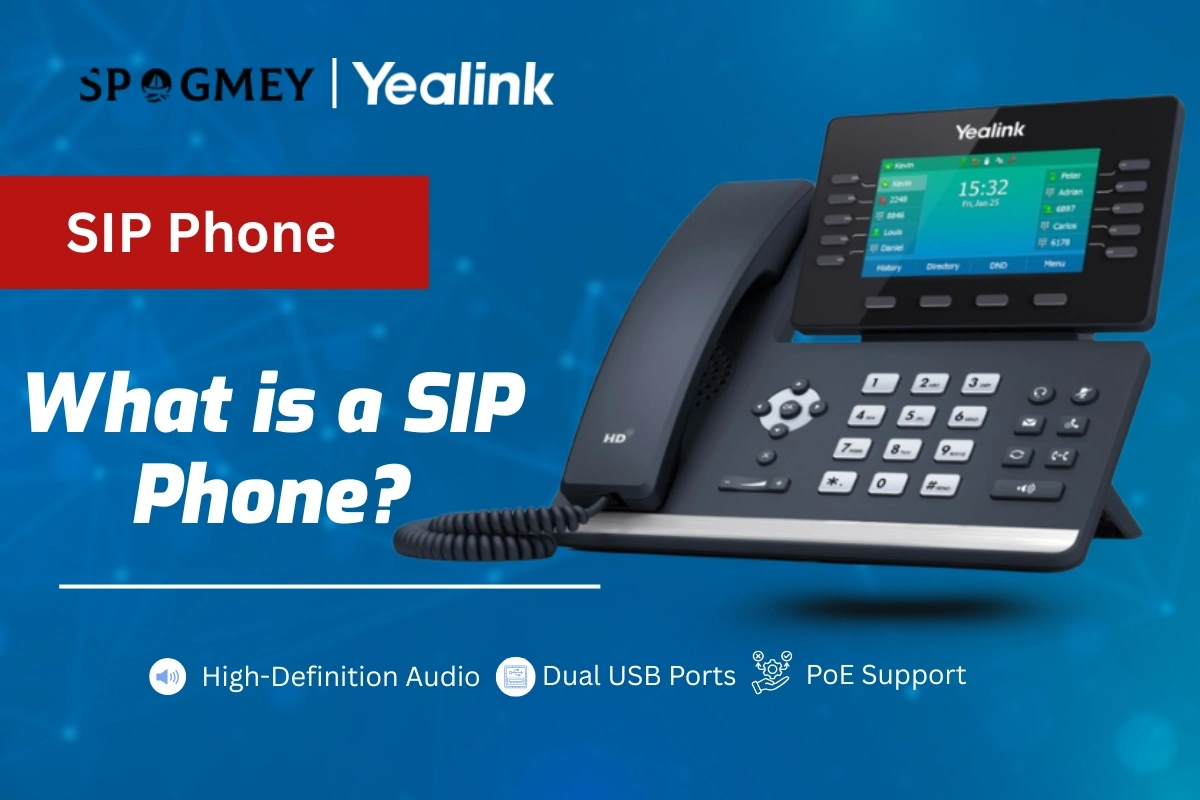
A SIP phone is a device that uses the Internet to make and receive phone calls. Instead of relying on traditional phone lines, SIP phones use Voice over IP (VoIP) to transmit voice data over the Internet. This offers several benefits over traditional phones, such as lower costs, advanced features, and wideband audio (also known as HD voice).
Types of SIP Phones
There are two different types of SIP Phones:
- Software SIP phones:
As the name suggests, Software SIP phones are software programs that can be installed on a computer or mobile device. These applications are downloaded, usually without any technical arrangement. Users sign in to their SIP service provider with their credentials and can start receiving and making phone calls.
- Hardware SIP phones:
These are dedicated phone devices that look and feel like traditional phones. A hardware SIP phone is also known as a hard phone. These look just like desk phones that operate using IP technology with a VoIP provider. Once authenticated, it stays connected to the service provider.
Now, the next question is: what is SIP, then? Well, here’s the detailed explanation:
What is SIP?
SIP is a short form for Session Initiation Protocol, which establishes real-time voice, video, and messaging between two or more devices. It’s usually the foundation of internet-based phone service, commonly referred to as VoIP.
Session Initiation Protocol (SIP) is a communication protocol that manages multimedia sessions, such as video and voice calls. To use SIP, you need a SIP phone system that establishes communication over the Internet.
SIP phones use Internet technology to make secure, reliable calls. The SIP protocol enables organizations to achieve unified communications, integrating basic phone capabilities with video, email, instant messaging, and more. Organizations and businesses use SIP phones if they want adaptability, dependability and unlimited voice calls.
What does Open SIP means?
What does open SIP means? Well, open SIP is also known as VoIP, referring to phones or systems that use the standardized Session Initiation Protocol (SIP) to operate across various third-party platforms, providers, and hardware. Unlike proprietary systems, open SIP phones ensure interoperability, allowing businesses to connect different phone brands and service providers seamlessly, offering flexibility and avoiding vendor lock-in.
Top Features SIP phone has:
- Call forwarding: Never miss a call, even when you’re away from your desk. Forward calls to another number, voicemail, or even another phone simultaneously.
- On-hold music: Keep callers engaged (and not annoyed) with professional music or custom audio messages while they wait.
- Wi-Fi calling: Make and receive calls over any WL.FI network, freeing you from your desk and traditional phone lines.
- HD phone calls: Experience crystal-clear wideband audio quality for smoother, more productive conversations.
- Auto-attendant: Greet callers with personalized greetings and automatically direct them to the right person or department.
- Call recording: Record business case or reference, training or quality assurance.
- shared call appearance: Multiple phones can ring for the same Incoming call, ensuring someone is always available to answer.
- custom caller ID: Display your business name or specific department instead of just a phone number.
- Mobile and desktop app Integration: Make and receive calls, manage contacts, and access other pane features directly from your Mabie device or computer
- Unified communications: Combine your phone system with other communication channels such as email, Instant messaging, and video conferencing for a seamless experience.
- HD audio: Enjoy wider audio bandwidth for richer, more natural-sounding conversations.
- Power over Ethernet (PoE): A PoE VoIP phone eliminates the need for a separate power cable by powering your phone directly over your network cable.
Differences between VoIP and SIP
While often used interchangeably, Voice over Internet Protocol (VoIP) and Session Initiation Protocol (SIP) play distinct roles in business communications.
VoIP forms the technological backbone, enabling voice communication to travel over broadband connections instead of traditional phone lines. It digitizes voice data, improving call quality and opening the door to features like video conferencing and call recording. With a VoIP provider, calls can connect between the public switched telephone network (PSTN).
SIP, on the other hand, acts as a standardised language. It dictates how devices and platforms initiate, manage, and terminate communication sessions between users. By establishing a common set of rules, SIP ensures seamless interoperability among diverse VoIP systems, enabling calls to flow smoothly across devices and platforms.
In essence, VoIP provides the calling technology, while SIP acts as the standardized communication protocol that makes it all work seamlessly. While VoIP can function without SIP, adopting this widely accepted protocol maximizes compatibility and ensures a smooth communication experience.
Benefits of SIP phones include
SIP phone upgrades can be very cost-effective. no matter the size of your company. Overall, there are several advantages to using SIP phones.
- You won’t depend on your local telephone company for copper lines.
- No maintenance or additional configuration unless you want to.
- Connect all employees within the business, including remote teams.
- Take advantage of call encryption for increased data security.
- Cloud-based management of your phone system means instant delivery of features anytime.
Your primary use of SIP phones should be the focus, not the brand of SIP phone you select. Think through the real-world examples of how your employees use their phones to communicate.
Some employees need more powerful phones, like a busy receptionist or a prominent business executive. Even for small businesses, there’s an affordable SIP phone that will help your team communicate more effectively.
Top Business SIP phones
1. Yealink T33G
An entry-level color-screen IP phone with high performance, the Yealink SIP-T33G supports four lines. With its fashionable appearance and a 320×240-pixel color display with backlight, it offers a comfortable user experience and clear visuals. Priced at $100.
- Number of Lines: 4
- Display Type: Color
- Screen Size: 2.4″
- POE Available: Yes
- Headset Input: RJ-9/EHS
2. Snom M18 KLE – SIP DECT 4-Line Deskset
A professional SIP DECT deskset designed for flexible and wireless business communication, the Snom M18 KLE supports four SIP lines and delivers reliable call performance. With its intuitive interface and clear color display, it ensures smooth call handling and enhanced productivity for office users.
- Number of Lines: 4
- Display Type: Color
- POE Available: No
- Headset Input: RJ-9
3. Yealink SIP-T54W with PSU – 1301081
A feature-rich business IP phone with advanced wireless connectivity, the Yealink SIP-T54W supports up to sixteen VoIP accounts. Equipped with a large adjustable color display and built-in Wi-Fi and Bluetooth, it provides superior communication flexibility and a user-friendly experience for modern offices.
- Number of Lines: 16
- Display Type: Color
- Screen Size: 4.3″
- POE Available: Yes
- Headset Input: RJ-9/EHS/USB/Bluetooth
If you want to purchase an SIP phone for your office or business, feel free to reach out to us for a discussion or guidance on which of the top Spogmey brands or SIP phones will best suit your needs.
FAQ's on What does open SIP means
SIP trunking is a service that acts as a bridge between your business's IP PBX system and the PSTN (traditional phone network). It allows your existing IP PBX to make and receive calls over the Internet without requiring separate phone lines.
SIP phones and VoIP phones are related technologies with a key distinction. VoIP is the broader technology that enables voice communication over the Internet instead of traditional phone lines. SIP, meanwhile, is a specific protocol used within VoIP systems to establish, modify, and terminate multimedia sessions, including voice calls.
VoIP is the general concept of internet-based calling, while SIP is one standardized method for implementing it. All SIP phones are VoIP phones, but not all VoIP phones use the SIP protocol — some use proprietary protocols like Skype or other standards. SIP phones offer advantages, including interoperability between different providers, easy scalability, and integration with other communication tools.
Follow these tips to ensure your SIP phone system delivers reliable and clear communication.
- Use high-speed Internet: Maintain a consistent, reliable connection to avoid call drops and choppy audio.
- Use quality equipment: Invest in good-quality SIP phones and network hardware from trusted vendors to minimize technical issues.
- Monitor performance: Track call quality metrics and diagnose any recurring issues early.
Set up Quality of Service (QoS): Tune your network to prioritize voice traffic so it doesn't get congested when users share or stream video over the Internet.
✍️ Author’s Bio
This article is written by Spogmey’s Research & Content Team, who collaborate with IT managers and hybrid teams across the USA to assess and review collaboration tools from brands like Yealink, Grandstream, OWL Labs, Snom, TP Link, and Ubiquiti Networks. With hands-on testing in real small-to-medium-sized business environments, our specialists deliver practical understandings that help decision-makers pick the right technology for their meeting rooms and business needs.
What is a SIP Phone? The Complete Beginner-Friendly Guide
Why Hang Up with Calling Party Control Matters in 2025
Difference Between a Video Conferencing Camera and a Webcam
Why Choose Spogmey?
Independent
We’re a fully independent wholesaler so you can count on us for unbiased advice.
Tech Support
Contact us before a sale, after a sale, whenever. Certified experts will help you.
Fast Delivery
Enjoy fast delivery with reliable service ensuring speed and satisfaction.
Blind Drop Shipping
Simplify your business — let us take care of storage and shipping.
Vendor Partners
No gray market here — we’re authorized to sell and support our products.
Provisioning
We configure endpoints to integrate with your VoIP system — no work for you.
Secure Shopping
256-bit SSL encryption protocols protect you and your information.
Payment Options
Flexible — use the payment method that works for you.
INFORMATION
PROGRAMS
CONTACT
Address
5900 Balcones Dr #19504 Austin TX 78731
- © 2025 Spogmey
- Terms & Conditions
- Sitemap
- Image
- SKU
- Rating
- Price
- Stock
- Availability
- Add to cart
- Description
- Content
- Weight
- Dimensions
- Additional information